
NDCUC Summer Outreach and Education
Bringing Corn to Life: Summer Outreach Connects Consumers with North Dakota Corn
Summer is one of the busiest seasons for the North Dakota Corn Utilization Council. While corn is growing across the state, the Council is also busy connecting with the consumers, families, and communities that North Dakota agriculture serves.
Through educational exhibits, hands-on activities, and one-on-one conversations, NDCUC spent the summer introducing thousands of North Dakotans to the many ways corn contributes to their everyday lives, from renewable fuels to food production and countless everyday products.
One of the Council’s first outreach events of the season was Gateway to Ethanol at North Dakota’s Gateway to Science in Bismarck. Hosted by North Dakota Ethanol, the free family event gave visitors an opportunity to learn how ethanol is produced and why renewable fuels matter to North Dakota agriculture. 
At the NDCUC booth, children stepped into the role of junior pit crews at the ND Corn Pit Stop, fueling Little Tikes race cars while learning how corn is transformed into clean, renewable ethanol. Parents and other visitors learned about Unleaded88 and how choosing the fuel can help save money at the pump while supporting North Dakota farmers and expanding markets for corn.
“Events like Gateway to Ethanol make learning fun,” said NDCUC Vice Chairman Scott Spear. “They help families see the connection between the corn growing in our fields and the fuel they’re putting in their vehicles. Those conversations are an important part of helping consumers understand agriculture.”
The Council continued its summer outreach at the North Dakota State Fair, where families gathered in the Agriculture Area to take part in The Great Corn Challenge. This fast-paced, Family Feud-style game show that put players agricultural knowledge to the test. Throughout the 30-minute experience, contestants competed to identify the most popular survey answers while learning about modern farming, renewable fuels, livestock feed, and the thousands of products made from corn…(pg.35)
NDSU Farm Safety Camps Prepare the Next Generation
As technology continues to advance and more young people become involved in farm operations, safety remains more important than ever. This summer, North Dakota State University Extension hosted its annual Farm Safety Camps, with sessions in Devils Lake, Bismarck, and Dickinson. By offering camps across the state, NDSU gave youth from many communities the opportunity to participate close to home. 
The camp provides participants with something that can’t be replicated in a classroom, hands-on experience. From operating tractors and machinery to earning ATV certification, learning first aid and emergency response, and practicing outdoor safety procedures such as electrical and firesafety, campers gain practical knowledge they can take back to thefarm. Working alongside industry professionals, equipment operators, and community partners, participants receive valuable instruction while building the skills and confidence needed to stay safe in agricultural environments…(pg. 10)
- Building a Foundation in Safety
- Hands-On Learning
- Teamwork and Livestock Safety
- Investing in Farm Safety
Investing in the Next Generation of Agronomists
Every growing season presents new challenges for North Dakota farmers, making knowledgeable crop scouts and agronomy professionals more important than ever. That’s why the North Dakota Corn Utilization Council is proud to once again sponsor NDSU Extension’s Junior Crop Scout Schools, helping introduce young people to the science and careers that support modern crop production.
This summer, three one-day Junior Crop Scout Schools were offered across the state in Carrington, Portland, and Hampden, giving youth ages 12 to 18 the opportunity to gain hands-on experience in agronomy close to home. Participants explored crop growth stages, weed identification, crop stand evaluation, soil science, insects, and the many career opportunities available in agriculture. 
The Junior Crop Scout School has become a valuable educational program because it emphasizes practical, field-based learning. Rather than sitting in a classroom all day, students spend their time working directly in crops, using real scouting techniques and learning from Extension specialists and industry professionals. They also have the opportunity to hear from agronomy professionals about the many career paths available within agriculture, from crop consulting and research to precision agriculture and ag technology…(pg.14)
Corn Talk Magazine is here! Check out the full articles and Summer 2026 issue online: https://ndcorngrowers.org/summer-2026-corntalk/
Interested in your own copy? Reach out to Mark Puppe at to get one today.
Growing Agricultural Literacy, One Classroom at a Time
North Dakota educators stepped out of their classrooms and into the field this summer to experience the science behind modern agriculture during the Feeding and Fueling the World teacher workshop. Supported by the North Dakota Corn Utilization Council (NDCUC) in partnership with Nourish the Future, the two-day professional development event gave teachers hands-on experience with the science of food production, renewable fuels and natural resource stewardship while providing classroom-ready lessons they can use throughout the coming school year. 

“As the distance between the farm and the classroom continues to grow, it’s more important than ever that students have access to accurate, science-based information about agriculture. By investing in teachers, we’re helping bridge that gap.” Said Carson Klosterman, North Dakota Corn Utilization Council Chairman. “When educators experience modern farming firsthand, they can help students better understand where their food, fuel and everyday products come from.”
Nourish the Future is a national education initiative that equips science teachers with engaging, inquiry-based curriculum that connects agriculture with biology, chemistry and environmental science. Through the partnership, North Dakota educators have access to nationally recognized resources while experiencing agriculture firsthand in their own communities.
Throughout the workshop, teachers completed laboratory investigations exploring biofuels, genetics, digestion, watersheds, soil conservation and the role agriculture plays in feeding a growing population. Rather than watching demonstrations, participants conducted the experiments themselves, analyzed data and discussed how each lesson aligns with classroom science standards.
“The best professional development gives teachers something they can use the moment they walk back into their classrooms,” said Heidie Haugo, market development and communications director for the North Dakota Corn Utilization Council. “This workshop allows educators to experience each lesson exactly as their students will. They leave with practical resources, greater confidence and a deeper understanding of the science behind modern agriculture.”
Learning continued outside the classroom as participants toured a Casselton-area farm to see crop production firsthand before gathering for an evening meal and conversation at the home of North Dakota corn farmer Michael Olson. The workshop concluded with a tour of SB&B Foods, where teachers saw another step in the journey from crops grown in North Dakota fields to products used around the world.
For many educators, the opportunity to actively participate in the lessons is what makes the workshop so valuable.
“Today’s students are far more engaged when learning is hands-on, and they retain information better when they can actively work through a process,” said Scott Thiel, teacher at Southeast Region Career and Technology Center–Wahpeton High School Campus. “A shining example is the biodiesel activity, where students can see science concepts come to life through agriculture.”
Teachers returned home with laboratory materials, classroom activities and new connections to North Dakota agriculture, all designed to help students explore real-world applications of science while meeting educational standards.
“One of the things we’re most proud of is helping build relationships between educators and agriculture,” Haugo said. “When teachers have opportunities to ask questions, meet farmers and experience today’s agriculture for themselves, it creates authentic learning experiences they can share with their students for years to come.”
Horace High School teacher Cailyn Settlemeyer said the collaborative nature of the workshop stood out most.
“My biggest takeaway is the benefit of working with other teachers while completing the activities ourselves,” Settlemeyer said. “That hands-on experience gives me the confidence to implement these lessons in my classroom. It also helped me make connections with people in agriculture who can create new learning opportunities for my students.”
Through its continued partnership with Nourish the Future, the North Dakota Corn Utilization Council remains committed to supporting teachers with high-quality educational experiences that connect science, agriculture and innovation. By investing in educators, the Council is helping prepare the next generation to better understand one of North Dakota’s most important industries and the many careers and opportunities it provides.
Corn Talk Magazine is here! Check out the full article and Summer 2026 issue online: https://ndcorngrowers.org/summer-2026-corntalk/
Interested in your own copy? Reach out to Mark Puppe at to get one today.
Investing in Tomorrow: New NDSU Facilities Strengthen the Future of North Dakota Agriculture
 This summer, North Dakota agriculture celebrated two milestones that will shape the future of research, education and innovation for decades to come.
In June, North Dakota State University dedicated its new Swine Research and Education Facility, a project supported by a $2 million investment from the North Dakota Corn Utilization Council. Less than two months later, university leaders, researchers and industry partners gathered once again to celebrate the opening of the Bolley Agricultural Laboratory, a modern research facility that will become home to many of the discoveries that help North Dakota farmers remain productive and competitive.
Speaking at the dedication of the Swine Research and Education Facility, NDCUC Chairman Carson Klosterman said the Council’s investment extends far beyond bricks and mortar.
“For us, this investment is about much more than buildings and equipment,” Klosterman said. “It is about students, research and the future of rural North Dakota.”
That philosophy has guided the Council’s support of research and education for decades. Checkoff investments are made not only to create markets for corn today, but to strengthen the entire agricultural system that supports producers tomorrow.
“Strong livestock industries create strong demand for feed grains and coproducts, and strong crop production supports livestock growth,” Klosterman said. “When those pieces work together, rural communities benefit.”
The new swine facility provides students with hands-on learning opportunities while creating space for research focused on nutrition, animal health, production efficiency and management practices. As North Dakota continues exploring opportunities for livestock expansion, those efforts will help prepare students for careers throughout agriculture while providing producers with practical research they can apply on their own operations.
“North Dakota has tremendous potential for growth in livestock production, including the swine industry,” Klosterman said. “But continued growth requires investment in education, workforce development and research infrastructure that prepares the next generation to lead.”
Just weeks later, another ribbon was cut across campus as NDSU officially opened the Bolley Agricultural Laboratory.
Named after pioneering plant scientist Henry L. Bolley, the facility now houses research programs in plant pathology, plant breeding, weed science, agronomy, soil science and horticulture. Located alongside NDSU’s research plots, the laboratory gives scientists the modern equipment and collaborative spaces needed to address some of the most pressing challenges facing crop production.
The work taking place inside the building will help develop improved crop varieties, advance disease management strategies, strengthen weed control practices and improve soil health. This research has direct benefits for North Dakota corn growers.
Like the investments being made in livestock research, the Bolley Laboratory ensures NDSU remains equipped to attract talented researchers, educate future agricultural leaders and deliver science-based solutions to producers across the state.
During the swine facility dedication, Klosterman note
d that practical research remains one of agriculture’s most valuable tools.
“As a farmer myself, I appreciate research that is practical and applicable, and that helps producers make informed decisions and strengthens agriculture for the next generation,” he said. “This facility helps ensure those opportunities continue right here in North Dakota.”
That same sentiment applies equally to the research that will take place inside the Bolley Laboratory.
Whether scientists are studying crop genetics, soil health, livestock nutrition or animal management, the goal remains the same: helping producers solve real-world challenges and creating opportunities that strengthen agriculture across North Dakota.
The projects also highlight something else Klosterman believes deserves recognition. The collaboration of commodity groups and the partnerships that make these facilities possible.
“Facilities like this only happen when the agriculture industry comes together around a shared vision,” he said while thanking university leadership, faculty, industry partners and fellow commodity organizations. “This project reflects the strength of partnerships across agriculture. Commodity groups, livestock organizations, university leadership, faculty, producers and donors all came together around a common goal. That collaboration is one of agriculture’s greatest strengths.”
Those partnerships have long been part of the Council’s approach to investing checkoff dollars. By working alongside NDSU and other agricultural organizations, the Council helps ensure projects address the needs of North Dakota producers while creating lasting value for the state’s agricultural economy.
For students, these new facilities mean better classrooms, updated laboratories and hands-on learning opportunities that reflect today’s agriculture.
For researchers, they provide the technology and resources needed to pursue innovative solutions.
For producers, they represent practical research that will improve profitability, sustainability and competitiveness for years to come.
And for the North Dakota Corn Utilization Council, they reflect a continued commitment to investing in projects that create long-term opportunities for corn growers.
“At a time when agriculture faces uncertainty and rapid change,” Klosterman said, “this investment demonstrates confidence in the future of our industry and confidence in the people who will lead it forward.”
The Swine Research and Education Facility and the Bolley Agricultural Laboratory reflect a shared commitment to keeping North Dakota agriculture at the forefront of innovation. For producers, students and researchers alike, they are more than new facilities. They are places where the next generation of agricultural solutions will begin.
Corn Talk Magazine is here! Check out the full article and Summer 2026 issue online: https://ndcorngrowers.org/summer-2026-corntalk/
Interested in your own copy? Reach out to Mark Puppe at to get one today.
North Dakota Grower Leaders Help Shape the Future of U.S. Corn Exports
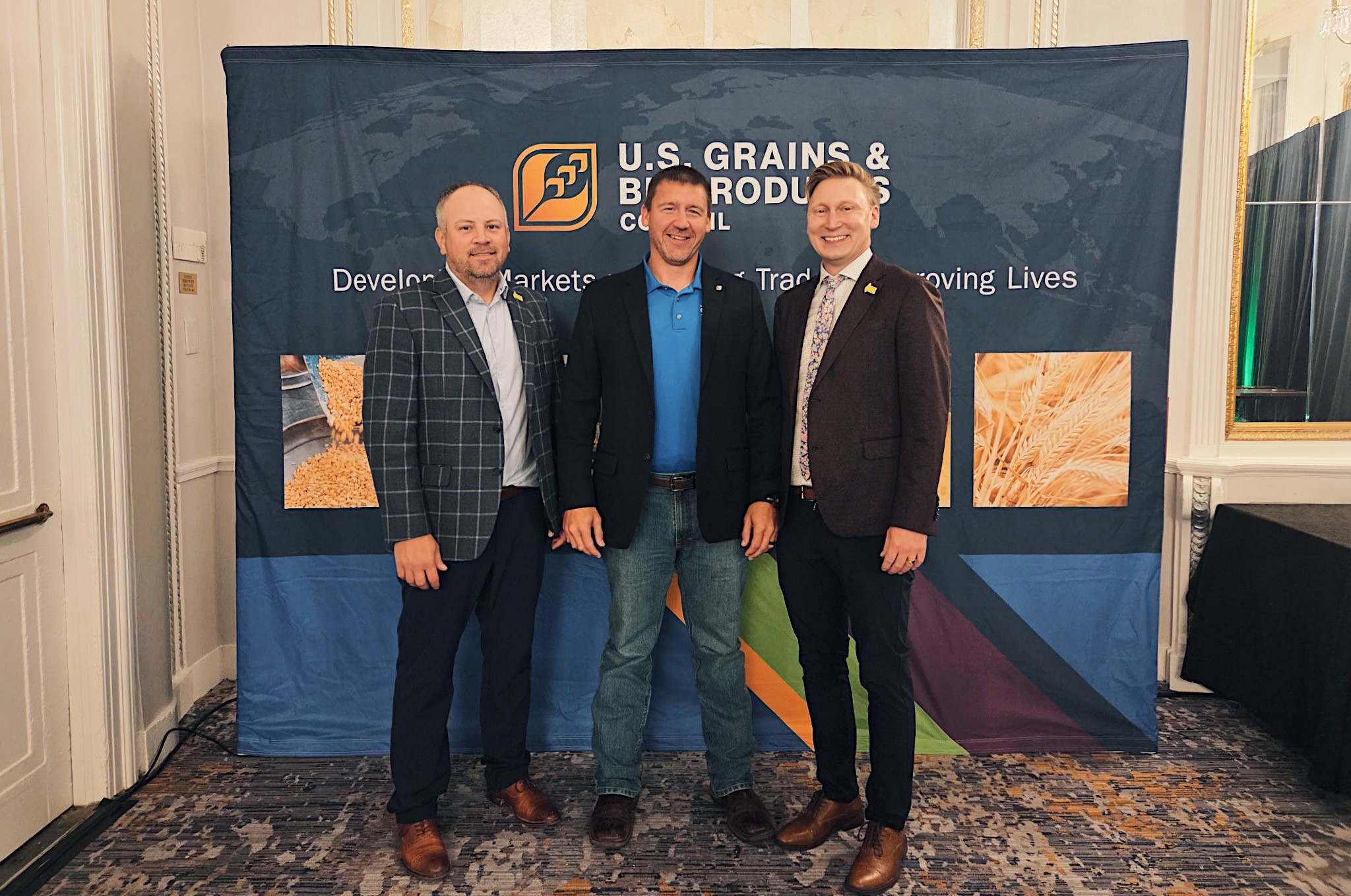 North Dakota’s corn industry was well represented on the national stage this summer as grower leaders traveled to Milwaukee, Wisconsin, for the 66th Annual Board of Delegates Meeting of the U.S. Grains & BioProducts Council (USGBC). Representing North Dakota were North Dakota Corn Utilization Council Chairman Carson Klosterman, North Dakota Corn Growers Association Vice Chairman Adam Ladwig, and North Dakota Corn Growers Association District Representative Ben Bakko.
The annual meeting brings together corn, barley, sorghum, and agribusiness leaders from across the country to discuss emerging opportunities, review global market conditions, and help set the organization’s priorities for the coming year. As voting delegates, North Dakota’s representatives play an important role in ensuring the voices of the state’s corn farmers are included in decisions that shape national export promotion efforts and international market development.
For North Dakota growers, participation extends far beyond attending meetings. The U.S. Grains & BioProducts Council works around the world to develop new markets and strengthen existing demand for U.S. corn, ethanol, distillers grains, and other corn products. Through offices and partnerships across more than 70 countries, the organization helps create long-term opportunities that ultimately add value back to American farms.
“As farmers, we know that what happens beyond our own fields can have a tremendous impact on our operations,” said Klosterman. “Serving as a voting delegate gives North Dakota producers a seat at the table where important conversations are happening about exports, trade, and the future of our industry.”
Throughout the meeting, delegates participated in discussions covering global trade, market access, ethanol, sustainability, transportation, and emerging opportunities for U.S. agriculture. Members also reviewed reports from the Council’s advisory teams and helped establish organizational priorities that will guide international market development efforts in the year ahead.
For a state that exports a significant portion of its corn production through domestic and international markets, maintaining a strong voice in these discussions is essential. As global demand continues to evolve, organizations like the U.S. Grains & BioProducts Council help ensure U.S. corn remains competitive while opening new opportunities for value-added products, including ethanol and distillers grains.
Participation by North Dakota grower leaders also strengthens relationships with farmers, commodity organizations, and industry partners from across the country. Sharing ideas and learning from other states helps bring new perspectives home while ensuring North Dakota’s unique opportunities and challenges are understood at the national level.
The North Dakota Corn Utilization Council and North Dakota Corn Growers Association remain committed to representing producers wherever important decisions are being made. Whether advocating for stronger export markets, expanding demand for corn-based products, or building relationships with international customers, grower leadership plays a vital role in protecting and growing opportunities for North Dakota agriculture.
By serving as voting delegates to the U.S. Grains & BioProducts Council, Klosterman, Ladwig, and Bakko helped ensure that North Dakota producers had a direct voice in shaping the future of international market development and in advancing opportunities for corn farmers across the state.
Corn Talk Magazine is here! Check out the full article and Summer 2026 issue online: https://ndcorngrowers.org/summer-2026-corntalk/
North Dakota Farmers Step Into New Leadership Roles: Greg Amundson and Mark Ressler Join the NDCUC Board
This spring, on April 1, 2026, the North Dakota Corn Utilization Council welcomed two new board members to its leadership team: Greg Amundson of District 3 and Mark Ressler of District 4. Both bring a passion for agriculture and a commitment to serving North Dakota’s corn producers, helping guide the Council’s efforts to strengthen and support the state’s corn industry.
 For Greg Amundson, serving on the NDCUC is another way to give back to an industry that has shaped his life. A fourth-generation farmer from Gilby, North Dakota, Greg and his family farm 3,000 acres in Grand Forks County, growing corn, soybeans, and canola. Before joining the Council, Greg spent many years serving on the North Dakota Corn Growers Association, where he gained valuable experience advocating for farmers and the future of agriculture.
When asked what inspired him to join the NDCUC, Greg pointed to the opportunity to continue being a voice for North Dakota producers. He is passionate about agricultural policy and advocacy and wants to help ensure farmers have the support and resources they need to succeed. Just as importantly, he hopes to strengthen the connection between agriculture and the communities it serves by promoting the importance of farming and the impact it has across the state.
When he’s not on the farm or serving on the Council, Greg enjoys spending time with his family and being out on the water.
Representing District 4 is Mark Ressler of Cooperstown, North Dakota. A fourth-generation farmer, Mark works alongside his wife, Sarah, their four daughters, and his brother on the family operation. Together they raise corn, soybeans, hard red spring wheat, and alfalfa, along with raising cows. Their farm utilizes both conventional tillage and no-till practices, depending on whether fields are dryland or irrigated. They also continue to use towable irrigation pivots and rely on horses to help manage their cattle. Traditions that reflect the operation’s time in agriculture and love for the lifestyle.
Mark says his motivation for joining the NDCUC is simple: he wants to make a difference. He believes meaningful change comes from getting involved and wants to be a strong voice for farmers and crop producers across North Dakota. By serving on the Council, he hopes to help impact decisions that positively impact agriculture today and for future generations.
Outside of farming and Council responsibilities, Mark enjoys spending time with his family, hunting on their land, and traveling whenever he has the opportunity.

Although they come from different districts of the state, Greg and Mark share a common goal: advocating for North Dakota agriculture and serving the farmers and communities they represent. They have already embraced opportunities to volunteer and engage in Council events, demonstrating their dedication both on and off the farm.
The North Dakota Corn Utilization Council is excited to welcome Greg Amundson and Mark Ressler to the board. Their leadership, fresh perspectives, and commitment to agriculture will help strengthen the Council’s mission as it continues to support corn growers and promote the success of North Dakota’s corn industry.
Corn Talk Magazine is here! Check out the full article and Summer 2026 issue online: https://ndcorngrowers.org/summer-2026-corntalk/
Interested in your own copy? Reach out to Mark Puppe at to get one today.
ND Corn on the Global Stage
 North Dakota corn leaders played an important role in shaping global grain trade at the U.S. Grains & BioProducts Council’s International Marketing Conference and Annual Membership Meeting, held February 11–13 in Panama City, Panama.
Representatives from the North Dakota Corn Utilization Council and North Dakota Corn Growers Association joined industry partners from around the world to discuss market opportunities and set priorities for expanding demand for U.S. corn, ethanol, and other bioproducts. Through Advisory Team sessions, North Dakota delegates helped ensure the perspectives of local growers were included in key conversations around trade, infrastructure, and market development.
This year’s conference highlighted growing opportunities in Latin America and the Asia-Pacific region, along with the importance of global logistics systems like the Panama Canal. A key moment included the signing of an agreement between USGBC and the Panama Canal Authority aimed at improving trade efficiency and strengthening collaboration.
The event wrapped up with discussions that will guide USGBC’s strategy moving forward. By participating as delegates, North Dakota representatives helped position the state’s corn industry for continued growth in global markets.
Corn Talk Magazine is here! Check out the full article and Spring 2026 issue online: https://ndcorngrowers.org/corntalk-spring-2026/.
Interested in your own copy? Reach out to Mark Puppe at to get one today.
Rooted in Service: Honoring Two Outgoing NDCUC Board Members

 Strong organizations are built by dedicated people, and for the North Dakota Corn Utilization Council (NDCUC), William Wagner and Tysen Rosenau have been just that. As they step away from their board roles, their contributions leave a lasting mark on North Dakota’s corn industry.
Bill Wagner, who represented District 3 and served as Vice Chairman, was a steady advocate for ensuring checkoff dollars were invested strategically and returned value to growers. He took pride in supporting programs, research, and organizations that strengthen agriculture across the state. Wagner also played an important role in promoting U.S. corn beyond North Dakota, particularly through his involvement with national and international partners focused on expanding export opportunities.
Tysen Rosenau, District 4 representative from Carrington, brought a hands-on farmer perspective and a strong commitment to understanding how the council’s work impacts producers at the ground level. From participating in outreach efforts to engaging in market development opportunities, he consistently focused on connecting board decisions back to real-world benefits for farmers. Experiences like hosting trade team visits highlighted the importance of building relationships and showcasing how North Dakota corn supports the broader agricultural supply chain.
Together, Wagner and Rosenau exemplified the leadership, curiosity, and dedication that drive the NDCUC forward. Their service not only helped guide key investments and priorities, but also strengthened connections within the industry. Their impact will continue to be felt as the council builds on the strong foundation they helped create.
Corn Talk Magazine is here! Check out the full article and Spring 2026 issue online: https://ndcorngrowers.org/corntalk-spring-2026/.
Interested in your own copy? Reach out to Mark Puppe at to get one today.
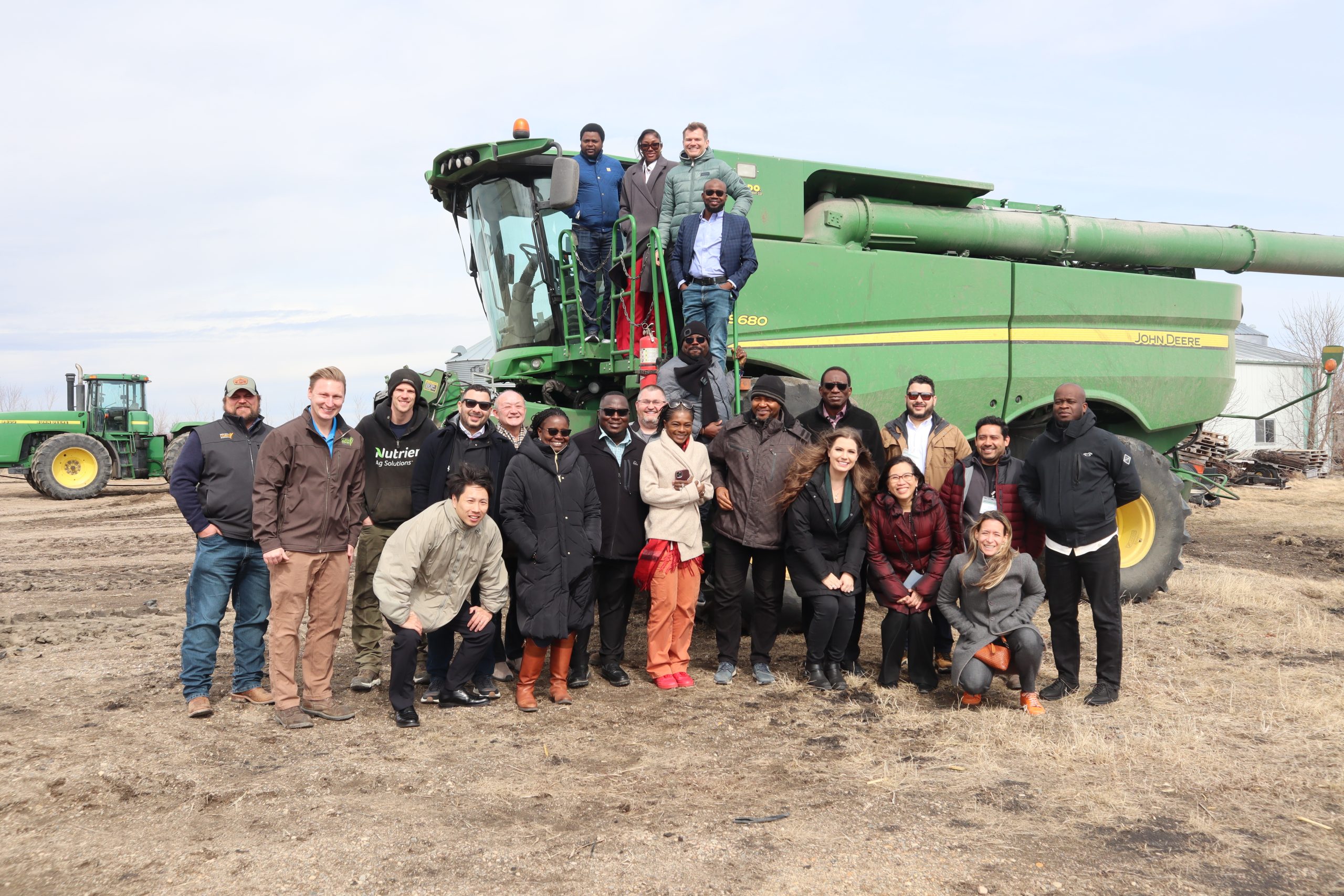 In March 2026, the Northern Crops Institute (NCI) welcomed 19 participants from eight countries to Fargo, North Dakota, for its U.S. Ethanol Production and Procurement course. The weeklong program offered a comprehensive look at the U.S. ethanol industry, connecting global stakeholders to everything from corn production to fuel markets.
Spring into Ag
 This spring, the Living Ag Classroom connected more than 4,000 elementary students across North Dakota and northwestern Minnesota to agriculture through hands-on learning experiences. With stops in Jamestown, Bismarck, Minot, Fargo, and Lisbon, the program continues to bridge the gap between the farm and the classroom.
Students explored interactive “Farm-to-Fork” stations covering topics like soil health, farm safety, commodities, and careers in agriculture. A highlight for many was the North Dakota Corn Utilization Council booth, where students discovered the many uses of corn and how it shows up in everyday life.
The program’s success was driven in part by student volunteers, including FFA members and Sigma Alpha students from North Dakota State University, who helped lead lessons and engage younger audiences.
Programs like Living Ag Classroom play a vital role in building agricultural awareness, sparking curiosity, and helping students better understand the importance of agriculture in their daily lives.
Corn Talk Magazine is here! Check out the full Spring 2026 issue online: https://ndcorngrowers.org/corntalk-spring-2026/.
Interested in your own copy? Reach out to Mark Puppe at to get one today.
Setting the 2026 Corn Crop Up for Success
Authors: Jeff Stachler, NDSU Extension Cropping Systems Specialist at the Carrington Research Extension Center, and Brady Goettl, NDSU Extension Soil Science Specialist
The 2026 corn planting season is approaching very soon. Farmers really only get one chance to properly prepare and plant a corn crop in order to maximize corn yields, but more importantly, maximize profitability. At the time of writing this article (April 9th), corn planting may begin in late-April to early-May this year in most parts of North Dakota due to soil temperatures. Hopefully, this spring’s weather cooperates for timely corn planting! According to one source, supplies of corn hybrid maturities of 85 days or less are pretty tight.
Hopefully, farmers have already chosen the proper corn hybrids for each field, considering soil types and fertility, disease and insect pressure, and proper corn maturities for where the corn will be planted. Selecting the proper corn hybrid for a field is usually the number one practice to maximize corn production profitability. Based upon a 50-year history of Wisconsin corn hybrid trials, the average yield difference between the highest yielding and the lowest yielding hybrid was 70 bushels per acre (bu/A). Choosing the correct hybrid is critical. Based upon University of Minnesota research data, corn hybrid selection may boost corn yields 37 to 64 percent (Table 1).
Table 1. Corn planting practices boosting corn yields. (University of Minnesota research)
| Agronomic Practice | Potential Yield Increase (percent) |
| Hybrid selection | 37 to 64 |
| Crop rotation versus continuous corn | 5 to 19 |
| Uniform crop emergence | 5 to 9 |
| Tillage system for continuous corn | 6 to 15 |
| Late versus early maturing corn hybrids | 5 |
| Early versus late planting date | 2 to 5 |
| Plant population | 1 to 2 |
| Uniform plant spacing | 1 to 2 |
| Narrow or twin rows versus 30-inch rows | 0 to 4 |
Planting
For proper planting of corn, please check all parts of your planter now, prior to planting, to make sure all parts are working properly. Pay special attention to the disk openers, making sure the diameter is preferably 15 inches and no less than 14.5 inches.
Soil condition and temperature are the next two management decisions to make before planting. Be sure the soil is at the proper moisture before conducting tillage and/or planting. Soil conditions too wet while conducting tillage will produce clods and cause soil compaction wherever tires, disk blades, and cultivator shovels travel, creating compaction and a poor seedbed. If soils are too wet when planting, the seed trench may be smeared, causing sidewall compaction and poor root development. Allowing the soil to get too dry prior to tillage and/or planting can leave too little water in the soil for proper seed germination.
Soil temperature is critical to maximizing corn yield! Corn can start germination at a four-inch average soil temperature of 50 degrees Fahrenheit, however if soil temperature stays near this average temperature, it may take up to 35 days for the corn to emerge. If the average soil temperature at a four-inch depth is 65 degrees Fahrenheit, corn can emerge within seven days. Based upon Purdue University research, if corn emerges later than one to one and a half weeks and non-uniformly, corn yields can be reduced by six to eight percent! According to University of Minnesota research, corn hybrid selection, crop rotation (a minimum of one other crop with corn, preferably more), and uniform emergence can account for up to 90 percent of corn yield increases. Corn yield in North Dakota only starts decreasing one percent per day after the optimum planting date of mid-May, so if the average 4-inch soil temperature is below 65 degrees Fahrenheit before mid-May, it’s better to leave the seed in the bag. Hefty Seeds promotes the planting of their Hefty Brand 40 Series Corn at a 40 degrees Fahrenheit soil temperature, and you may talk to their seed representatives about their replant policy, however the NDSU Carrington Research Extension Center has no research data to support their soil temperature planting claims.
Planting depth is also critical to maximizing corn yield due to proper nodal root development. A Purdue research study showed that different corn hybrids may have different yield potential based on planting depth. In the study, corn yields maximized for one hybrid when planted at a two-inch depth, while a second hybrid’s yield maximized at a planting depth of two to two and one-half inches. Gather information on planting depth for all of your corn hybrids, and if you don’t know, just plant all corn hybrids at a two-inch depth and never plant corn less than 1.5 inches deep.
For maximum corn yield, corn plants need to emerge all at the same time and be equally spaced. Non-uniform emergence and plants emerging as doubles and being non-uniformly spaced decrease corn yield.
Figure 1. Non-uniform corn emergence.

For most regions of the state and for most corn hybrids, planting 29,000 to 35,000 seeds per acre is a reasonable planting rate range. For most drought-prone areas in North Dakota, the recommended planting rate is between 16,000 and 25,000.
Corn Fertility
Many crop input decisions have already been determined—and hopefully these decisions came with pre-booking of fertilizer! Looking at fertilizer pricing trends since late fall of 2025, “up” is the best way to describe the market, especially for nitrogen (N) fertilizers. In the Northern Plains, wholesale urea and anhydrous ammonia prices have increased 69% and 27%, respectively, between November 2025 and the end of March 2026 ($200-$350 per ton). Corn is one of the highest fertilizer-input grain crops in North Dakota; logically, farmers are interested in “cutting back” not only on N, but on other fertilizer inputs as well. Brady Goettl has received many calls and emails about making fertilizer cuts, and is quick to remind everyone that “cutting” is not how we should be looking at fertilizer use, rather “how can I increase fertilizer efficiency” is much more fruitful in the long run (and farming should be considered a long-run business). With increasing corn fertilizer efficiency in mind, here are a few key points to consider for the 2026 growing season:
- Know the soil fertility for each field
- Fertilize for profitability
- Be curious, but skeptical
Knowing Soil Fertility: Soil testing should be the first step when creating a fertility management plan. How can we expect to best manage our fertilizer, and know how much to apply, if we don’t first know what the soil test levels are? Do you take off on a road trip without first checking the amount of fuel in your vehicle? Great weather conditions in 2025 facilitated N mineralization throughout the summer and fall, leading to fields having very high residual nitrate-N levels. Data from Agvise Laboratories shows median nitrate-N levels following corn, wheat, and soybeans, at 42, 36, 26 pounds (lbs.) N/acre (A), respectively, with some samples at more than 100 lbs./A. This residual N should be considered as money in the bank and can be deducted from the total amount of N fertilizer needed in 2026.
While N is often considered the most important nutrient for corn, attention must also be paid to phosphorous (P) and potassium (K). Remember Liebig’s law of the minimum: “Yield is proportional to the amount of the most limiting nutrient, whichever nutrient it may be.” To ensure all fertilizer is used with the highest efficiency, we need to make sure one nutrient is not limiting the efficiency of the others.
Fertilize for Profitability: By approaching fertilizer recommendations from the standpoint of maximizing crop profitability instead of maximizing corn yield, not only will the probability of increased net return be realized, but the amount of N fertilizer is usually reduced—a win-win! While the outdated corn yield goal N recommendations attempted to maximize yield, they did so without regard for diminishing returns as the crop reaches maximum yield. It takes more N to grow each bushel of grain the closer you are to maximum yield (in addition to reaching a point where the additional bushels cost more to grow than the sale price). Recommendations made using economic optimum N rates (EONR) will maximize net return by only recommending N be applied until profit disappears, regardless of maximum corn yield.
Shifting mindsets away from producing the highest corn yield per acre to maximizing economic returns per acre will serve farmers well this year. Overall N inputs can be reduced by using EONR with the crop producing near the point of maximum net return—positive economics in a tight year! NDSU-Extension corn recommendations for both N and K are developed to maximize economic returns. Information can be found in the circulars “North Dakota Fertilizer Recommendation Tables” (SF882) or “Soil Fertility Recommendation for Corn” (SF722) or by using the online North Dakota Crop N Recommendation Calculators (https://lamp.ndsu.edu/soils/FourCropsNitrogenCalculatorWebApp/).
Be Curious but Skeptical: The old adage “if it is too good to be true, it probably is,” also rings true in the world of soil fertility. As margins tighten, products promising big results start getting lots of attention, whether they be biological, humic, or any other. While there are certainly effective new and upcoming products, their effectiveness should be based on unbiased, third-party, and university research results. Investing money in products promising increased yield, reduced fertilizer application rates, a one pint per acre application rate—and the only research is from one side-by-side “trial” at an undisclosed location—is probably too good to be true. Through the work of Land-Grant Universities in the North Central Region, the “Compendium of Research Reports on Use of Non-Traditional Materials for Crop Production” (https://ncera103.org/) has been developed. This compendium is a good first-stop shop to locate unbiased research results on non-traditional soil amendments.
If you have a product you’d like to try on your farm, installing a replicated strip trial is the best option. Conducting replicated trials provides real, statistically valid, and useful data that can be collected—and at a lower risk than applying a product to the entire field. If you are interested in learning more about on-farm research trials, reach out to your local NDSU Extension Agent or Extension Soil Specialists located across the state.
Pest Management
Weeds: NDSU Extension has confirmed the presence of atrazine, 2,4-D, and Group 27 (HPPD-inhibiting herbicides)-resistant waterhemp in southeast, ND this past winter. Waterhemp is best managed in corn by applying multiple preemergence herbicide sites of action followed by multiple postemergence herbicide sites of action. Applying residual herbicides postemergence, such as Group 15 herbicides, improves waterhemp management in corn.
Diseases: Corn leaf diseases were more prevalent in 2025 than in past seasons, and tar spot was found for the second year in a row in ND, in more fields and at greater severity than in 2024. Carefully scout corn fields this season from tasseling and beyond for the presence of tar spot, most importantly, but for all corn leaf diseases. Closely monitoring corn leaf diseases during the 2026 growing season will assist in managing these diseases during this season and for the 2027 growing season.
Figure 2. Tar spot (photo by Adam Sisson)

Insects: Northern corn rootworm populations were at a ten-year high in southeast, ND in 2025. Corn rootworm traps were placed in Barnes, Cass, Ransom, Richland, Sargent, and Steele Counties in 2025. Northern corn rootworm beetles were found at economic threshold (2 beetles per trap per day) in 80 percent of the ten monitored 2025 fields across these counties. Farmers in the southeast part of ND should consider purchasing yellow sticky traps and placing them in corn fields this season to monitor for northern and western corn rootworm beetles.
Figure 3. Corn rootworm yellow sticky trap (photo by Ashley Dean)

North Dakota Crop and Pest Report: For the most up-to-date information on North Dakota crop production during the growing season, visit the North Dakota Crop and Pest Report website (https://www.ndsu.edu/agriculture/ag-hub/ag-topics/crop-production/crop-pest-report) and subscribe to receive vital information.
Corn Talk Magazine is here! Check out the full article and Spring 2026 issue online: https://ndcorngrowers.org/corntalk-spring-2026/.
Interested in your own copy? Reach out to Mark Puppe at to get one today.
